Blog

  • Hello world!

    Welcome to WordPress. This is your first post. Edit or delete it, then start writing!

  • Member-owned health fund

    Member-owned health fund

    Gaps in health care across regional Australia are an ongoing concern for communities. Deepend was engaged to research into people’s experiences and then to develop a new digital product that aims to help the health fund’s members access and navigate health care.

    Following our insights gathered in the research phase, we helped the client prioritise their ideas and develop a product direction. From a variety of proposals they chose the idea of a preventative health app. Once the product direction was established, we designed the app from first principles to launch, scheduled for May 1, 2025.

    Leading product design, I was instrumental in planning and delivering research, journey mapping, identifying possible future products.
    Once the product to be designed was decided, I was responsible for creating personalised product logic, co-creating features and delivering complete experience design.

    Phase 1: Research & Innovation

    Members interviewed

    Exploring health journey experiences

    Stakeholder workshops

    Close collaboration from context to ideation

    80+

    From the immediately actionable to never heard

    Product directions

    Evaluated and prioritised using R. I. C. E. framework

    Experience deep dive

    Over 2 months of research, from category desktop research over stakeholder context to in-depth interviews with identified member cohorts, we investigated the health care experience of regional Australians.

    Journey mapping

    We mapped their journeys, with special consideration to showing how key opportunities arise from experience. Finalised maps are now proudly displayed at client offices.

    From insights to features

    From the many opportunities we identified, we generated 6 product ideas that were refined in co-creation with the client.

    Phase 2: Product Design

    We moved from developing a digital product strategy and early ideation to MVP product design. The idea the client decided to develop is centered around encouraging health fund members to stay on track with important health checks and taking up wellbeing programs that are part of their plan. In future phases the product will also allow bookings for health checks and earning rewards.

    Co-creation

    We ran a series of flexible co-creation workshops with the client team to guide them through decision-making for app features and business rules.

    Experience design

    I then wireframed all parts of the product so that the client team could quickly write copy and decide on content hierarchy.

    Personalisation rules

    Designing a system of rules for what content will be offered to which user set, based on their answers in an online health questionnaire.

    MHA personalisation rules

    Sneak preview of the final product design

    Preventative health app - final design
  • Teacher’s Health Fund

    Teacher’s Health Fund

    This member-based health fund, eligible to parts of the community only, is operating in a rapidly evolving sector with heightened competition and increased expectations of digital experiences. A lack of investment in experience has become a risk to competitiveness to the fund, so Deepend was engaged to strategically bring the website to digital parity using a data-driven and user-centric approach. We focused on the prospect journey as proof of concept, using a two-phased approach that is currently being rolled out.

    We collaborated with the fund’s team to create an optimised journey that aligns with industry best practices and user expectations, introducting rapid experiments and improvement frameworks to ensure measurable acquisition uplift.

    Phase 1: demonstrating uplift

    5% uplift

    ‘Quote’ conversions

    Quick and agile experimentation resulted in refined UX/UI that maximises conversion in short term, prior to development effort.

    10% uplift

    ‘Join’ completions

    Improving clarity, setting expectations and refining experience created uplift in acquisition while still using the existing form.

    >> uplift

    Establishing a roadmap that drives long-term agility and iterative acquisition improvement sets the groundwork for digital parity.

    Phase 2: getting to digital parity

    01

    Filling gaps in experience

    Created pathways towards bringing experience up to best practice, ‘chunking up’ journey parts to enable staged delivery.

    02

    Leveraging off stronger data

    Created pathways for continuous improvement via GA4 tracking and agile testing processes for future interventions.

    03

    Driving towards an ideal future

    Leveraging user insights to ensure development effort is put towards the right improvement and planning for creating the ideal future.

    Strategic, data-driven co-creation

    A six-week discovery sprint using a collaborative model with a cross-organisational team assessed the effectiveness of the fund’s existing digital prospect journey.

    Our approach combined qualitative and quantitative insights, competitor benchmarking, and real-time experimentation to inform a backlog of high-impact initiatives.

    Stakeholder alignment workshops

    A six-week discovery sprint using a collaborative model with a cross-organisational team assessed the effectiveness of the fund’s existing digital prospect journey. Our approach combined qualitative and quantitative insights, competitor benchmarking, and real-time experimentation to inform a backlog of high-impact initiatives.

    User research and testing

    Identifying key experience gaps and validating potential interventions.

    Hypothesis-driven experimentation

    Iteratively improving conversation paths and optimising core digital touchpoints, delivered in agile sprints.

    Filling experience gaps

    Leveraging off insights and hypotheses created in the strategic phase, we moved towards creating an ideal future, designing small-scope itemised parts of the future journey and refining them with experimentation.

    Driving towards an ideal future

    During the first phase, we had increasingly pointed experiments towards an ideal future. In phase 2, I designed a prototype to take the ideal future we all believed in to user testing. Because the continued experimentation established some guardrails already, we were able to scope a lean test with parts of the overall acquisition journey already proven and under development.

  • Australian Red Cross

    Australian Red Cross

    Project Overview

    In a world where digital engagement drives change, the Australian Red Cross needed a refreshed digital identity — one that not only communicates its mission but also resonates emotionally with diverse audiences.

    With a commitment to empathy, trust, and action, the Red Cross embarked on a comprehensive digital brand refresh and website transformation, an 18-month project now progressing towards an August launch.

    As Lead Product Designer at Deepend, I led this transformative journey, crafting a digital brand experience that brings the Red Cross’s values to life.

    My work spanned creative design, digital brand strategy, and website transformation, ensuring the new identity is modern, flexible, and deeply empathetic.

    Outcomes & Impact

    01

    Enhanced User Experience

    Improved accessibility and clarity for users in crisis, donors, and volunteers.

    02

    Streamlined Content Management

    Streamlined content management with an extensive updated component suite.

    03

    Improved User Engagement

    Interactive elements and dynamic storytelling components foster deeper connections.

    04

    Scalability & Future-Proofing

    A modular design system supports ongoing growth and adapts to emerging needs.

    05

    Stronger Brand Consistency

    A unified digital brand reinforces trust and recognition across all touchpoints.

    06

    Expert guidance for client teams

    Design System site empowers internal teams to create high-quality, consistent content.

    The Three Drivers for our Design

    Data-Driven Design for organisational and user needs

    • Conducted extensive user research, including stakeholder interviews, usability testing, and data analysis.
    • Leveraged analytics to refine design decisions, optimising conversion rates for donations and engagement.
    • Implemented A/B testing to enhance UX elements, ensuring an intuitive and frictionless experience.
    Australian Red Cross component designs by Elisabeth Brassé

    Creating a modern, vibrant digital design system

    • Establishing UX guardrails to ensure components meet user needs
    • Developing a new UI toolkit
    • Designing 36 new and updated UI components for the Optimizely CMS
    • Creating the GEL / Online Design System

    Collaborating to uplift and expand CMS-ready components

    • Partnering closely with the external development team to ensure a seamless build and to maintain quality control.
    • Introducing a ‘component spec sheet’ to streamline communication between design and development teams.
    • Collaborating with the internal Red Cross team on QA, continuous improvement, and A/B testing.

    Delivering best practice guidance

    A key aspect of this project was delivering best-practice guidance for all Red Cross staff and volunteers, leading to a significant uplift in UX across the site.

    I designed 76 optimised pages as best-practice examples for internal teams to implement.

    I also created a UI Design System available as a Figma library and a dedicated internal GEL site with best practice guides and how-tos so that all team members can deliver great user experience.

    “This is fantastic work! Including not only component and template designs, but also guiding the team in best practice uses of these designs really adds so much value. Oh, and – our team’s recent donations campaign has been super successful! We can’t thank you enough.”

    – Christine Kurpitz, Head of Digital, Australian Red Cross

  • OzHarvest

    OzHarvest

    A Major Update

    OzHarvest had not updated their website in 15 years, so this major update was a major challenge in many ways.

    Originally engaged as a freelancer for Paper Moose to spend 3 weeks on IA, I ended up seeing the project through to the end of the design stage, about 9 months later. The Mooses have written a lovely case study on the project.

    Content Sorting and new IA

    Our first priority was a new structure and hierarchy for the organisation’s many arms, making sense of what they do.

    Conducting several workshops around content, user journeys and personas, I collaborated with client teams to restructure and slim down 7 WordPress websites with 132 pages into 2 sites with 34 pages.

    Wireframing

    Next, we mapped out how OzHarvest can most easily explain what they do in future. I had opportunity to inject my knowledge about experience design for the NGO sector, and to collaborate on the content design with the client’s comms team.

    I provided content design and detailed wireframes for all site pages.

    UI Design

    Paper Moose’s Divya Abe was the UI Design Lead on the project, while I passed on the client context and knowledge I had gained during the UX phase, helping find two on-brand design concepts. We then collaborated in creating final page designs across all breakpoints.

  • Sound Surge

    Sound Surge

    A Collaborative Update

    Sound Storm was originally developed by Deepend for National Acoustics Laboratory before I joined the company. I have been leading the experience design on various updates and continuous improvement projects.

    This large update, called Sound Surge, is currently in development and takes Sound Storm to a new market in the US.

    The original award winning project is described well in this case study by Deepend

    Sound Storm story design hero Suno the lion
    Sound Storm digital product map

    Roadmapping Digital Product Options

    The complexity of options available to us in creating a new digital product out of the legacy Sound Storm app required us to communicate possibilities with all stakeholders. So, Deepend founder Matt G and myself collaborated in creating an overview in an interactive visual map on Miro.

    A screenshot from Figma showing a legacy digital product being updated

    Product Design Approach

    Because this project started with a legacy design, our major design updated is a mix of fact-finding, wireframes for new functionality and updated UI elements to meet modern criteria for resolution and accessibility and to satisfy user needs we learned about over time.

    A Fact-Finding Mission

    A major update of a legacy product, by its nature, often results in going to the vault and finding documentation – what software is used changes over time.

    For this design, the original was delivered in a layered photoshop file, so my own legacy skills came in handy (I first learned Photoshop Version 1 as a teen helping out in my dad’s creative agency)

    Incorporating User Knowledge

    Drawing on the critical user knowledge from team members Kath O’Malley (product owner) and Isaac Nault (product manager), we found the best and most viable UI update together.

    As experience lead, I made sure to incorporate what the team learned from real live users over the years, so we could create an update that is even easier to use and understand than the original.

    As the new app is about to go live in schools around the US, I hope it will help even more children understand their teachers in noisy school environments – a cause that has been dear to my heart. Good luck, Suno!

  • ReachOut PeerChat

    ReachOut PeerChat

    Young people’s mental health and wellbeing is a major concern with almost 40% of 16–24 years old experiencing mental health struggles over the course of a year. Around a third of these young people have not sought professional support. There are numerous systemic barriers that result in an urgent, unmet need for early intervention and youth-centred services for around 1 million young Australians.

    PEERCHAT PARTICIPANT FEEDBACK

     A Young man sending a text message from his home

    Outcomes & Impact

    PeerChat helps hundreds of young Australians each year to overcome systemic mental health support barriers when they need it most.

    PeerChat can reduce distress, increase mental health knowledge, and positively influence the way young people feel about themselves and others. It enhances the wellbeing of young people through connection, understanding, and hope. Its digital, anonymous, and one-on-one nature improves accessibility for our most vulnerable communities. Importantly, it’s an exemplar for the value of people with lived experience to co-produce and deliver safe services that are highly personal while being relevant and inclusive for the diverse nature of humanity.

    Improvement in wellbeing

    Service user rating

    Working hand in hand with online mental health service ReachOut, Steve Sullivan from How to Impact and myself conducted research into the specific support needs of young people with mental health struggles over a 12-week period. We then developed design guardrails for possible service models, ensuring the creation of a relevant and useful service.

    3 targeted co-design sessions and 2 online service experiments found that what young people needed most was for someone to listen and validate their struggles. One-on-one online chat with a trained peer emerged as their preferred method.

    PeerChat Innovation Research by Eli Brassé and Steven Sullivan

    Innovation Sprints

    Over 7 weeks of innovation focused codesign sprints, we uncovered young people’s support needs for a mental health service design that improves emotional wellbeing.

    Service Design

    We codesigned a peer worker service model, involved the peer community in testing and service pilots, and created operational procedures. Steven was the lead on this part of the project.

    PeerChat Service Design by Eli Brassé and Steven Sullivan

    Once the service model was uncovered, I created a blueprint and led the ReachOut team through a codesign process towards an ideal product design. The user experience was, again, tested extensively with young people, and I collaborated with the ReachOut tech team to create final designs that were effective for them to build. Deepend’s Jackie-Lee Hughes contributed to the User Interface design.

    PeerChat Use Cases by Eli Brassé and Steven Sullivan

    From Insights to Features

    From our co-created design vision and guardrails, we developed three distinct use cases that our service model answers.

    Product Design

    Through prototype-based codesign techniques, we progressively evolved a design with a booking system, onboarding and chat that answer to specific support needs.

    PeerChat Product Design by Eli Brassé and Steven Sullivan
    PeerChat Interface Design by Eli Brassé and Jackie-Lee Hughes

    Text Chat for Better Mental Health

    Our text chat design includes innovative health focused solutions such as the ability to hide previous messages from view to avoid re-triggering and the ‘I’m thinking’ button that gives support seekers time while ensuring supporters are informed that everything is okay.

    PeerChat Interface Design by Eli Brassé and Jackie-Lee Hughes

    Emotional Wellbeing by Design

    To ensure that users’ emotional wellbeing is enhanced, we augmented the main chat functions with a variety of innovative designed interventions, such as this calming onboarding interaction that reduces anxiety on starting the support chat.

    Good Design Award Gold Winner 2023

    Good Design Awards

    Service Design
    Gold Winner

    Good Design Award Winner 2023

    Good Design Awards

    Social Impact
    Winner

    Good Design Award Winner 2023

    Good Design Awards

    Digital Design – Apps & Software
    Winner

    Designers Australia Awards 2023

    Designers Australia Awards

    Interact
    Category Winner

  • Active Super

    Active Super

    Active Super is an ESG super fund that underwent a full rebrand and digital transformation with Deepend. Following this, we developed a continuous improvement model for them and tested widely. Our testing showed strongly that ESG focused customers wanted to have a detail view of where their money was invested.

    So, we suggested developing a data visualisation tool that answered to this customer need.

    Developing a data visualisation tool with a brief of full transparency and the underlying data model unclear at the start of the project was a tough ask. This is the result.

    Research

    Website users surveyed

    Exploring what data they wanted to see from their super fund

    2

    Finding two desirable data visualisation tools to develop

    Data workshops

    Close collaboration with the client data team

    Product Design

    Design directions

    Initial work on how to present the data as an interactive tool went in a variety of different directions

    Final outcomes

    The two final interactive tools slice and show the investment data from diffferent angles

    Website surveys

    We ran a series of quick website surveys asking users what information about the investments the fund makes on their behalf were most important to them.

    The answer: the countries and industries invested in.

    Data model

    We collaborated with the client to come up with a data model that allowed us to drill into the investment information from the angles we needed, a new sorting system to what they used internally (I guess unsurprisingly)

    Visualising the data

    The investment portfolios were presented in detail using a moving zoom function.

    First round wires for drilling into data by country

    Our early designs focused on the interaction but contained less depth of data – this design uses a world map with resized countries to visualise the size of investments.

    Final design for data world map

    In the final map design a right hand panel facilitates filtering and searching so that multiple levels of data can be presented in one view.

    Drilling into multiple levels of data using mouse-activated zoom function

    The investment portfolios were presented in detail using a moving zoom function.

    This enabled us to show multiple levels of data right down to individual companies, in one pretty tight interactive design.

    Final design for ‘sunburst’ zoom visualisation

    The final design allows the user to zoom using their mouse, filter on the panel on the right, or search for any company invested in directly.

  • CLV Homes for Students

    CLV Homes for Students

    Campus Living Villages (CLV) are global student accommodation specialists creating tailored student communities that suit the unique culture of each campus, University or city they work with. So, they came to us with a brief to develop a refreshed brand that allows them to reflect their incredible diversity while creating a unified experience.

    Immersion

    We interviewed 44 students across 4 continents, benchmarked best practice in experience in the category, and involved stakeholders, students and subject matter experts in co-design workshops.

    Synthesis & Strategic UX

    Following the research phase, I created personas and user journeys for a variety of user groups, experience guardrails, and more.

    Transforming CX with new Business Logic

    I undertook an extensive UX audit of the room booking processes in each region.

    In a collaborative process with the client, I updated the business logic for displaying and booking rooms, delivering on a best-in-class integrated user experience.

    Complete Set of Wires

    This project required us to deliver all content and full UX wires for every page.
    I first created a new IA, then moved on to on page content hierarchy and wireframes for copywriters and art directors, as well as instructions for image creators.

    UI Design

    Jackie-Lee Hughes from Deepend – who took the lead on the UI design – and myself rolled out the UI for all pages.

    Due to the nature of the project, this was quite extensive, with home pages for 3 global regions and hierarchy pages for cities, universities, villages and rooms throughout.

  • Sage.fm brand & ux/ui

    Sage.fm brand & ux/ui

    Sage.fm is an online video conversation platform, connecting experts (Sages) with those valuing their advice (Seekers). Currently, the start-up’s focus is shifting from product development to sales and marketing, with a number of early customers using the platform already.

    The Sage.fm brand is premised on two principles, of elevating the Sages and of creating a brand that is high-end but stays in the background.

    The live conversation is, naturally, at the heart of the platform. The design enables browser-based conversations across all types of devices, while delivering information about time and money spent and more.


  • ‘Made in…’ city travel guides

    ‘Made in…’ city travel guides

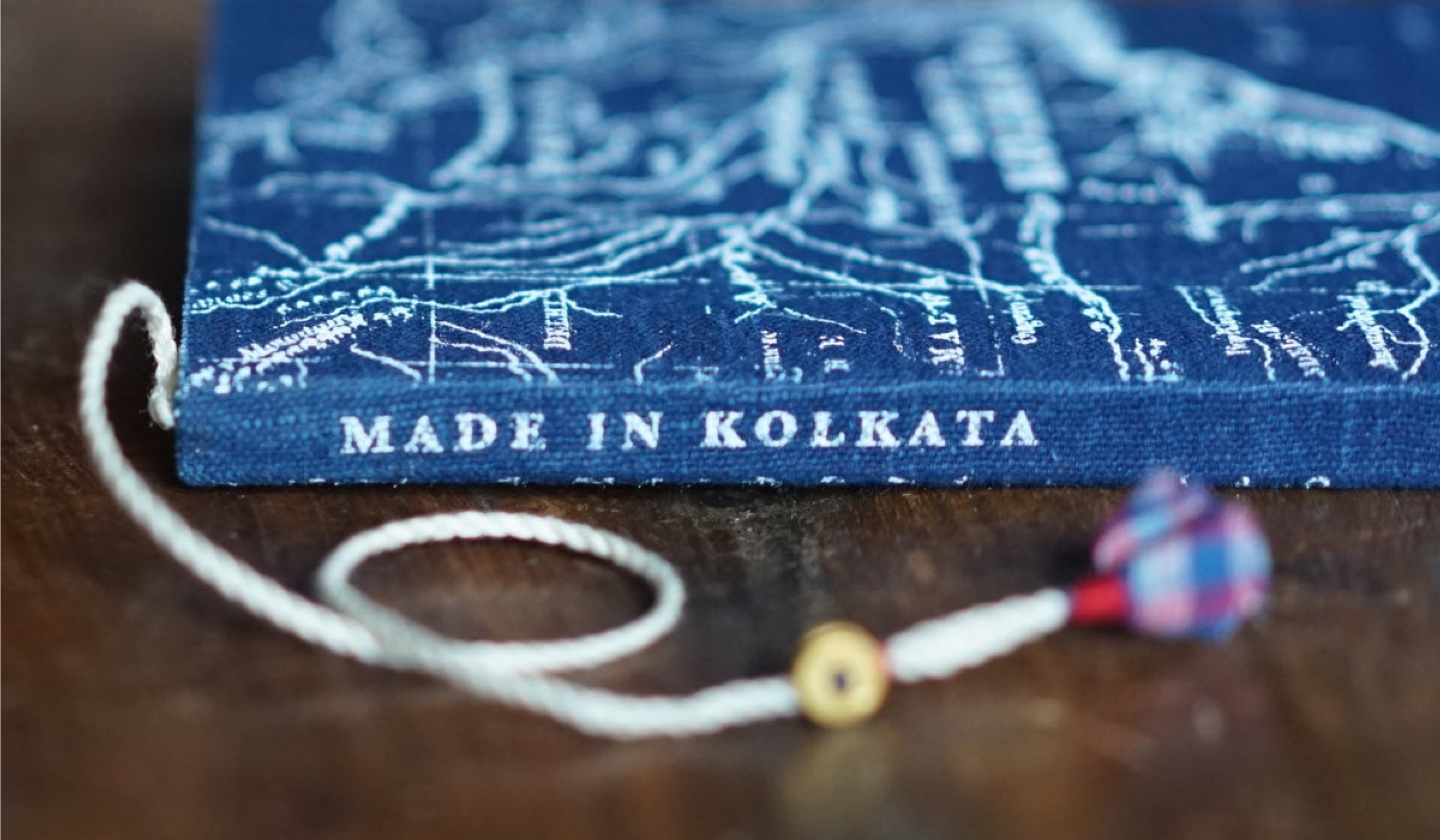
    The Made in… guides are a celebration of a city and the talented people who reside and work here. The highly curated guide profiles the city’s finest artists, artisans, craftspeople, designers, makers and shopkeepers who come together to produce and sell some extraordinary things. There are currently two guides available, Made in Kolkata and Made in Bengaluru. Each book comes with a matching travel journal, designed as a keepsake.

    These guidebooks to a city’s makers, designers and craftspeople are the result of a ten-year-long collaboration with author and publisher Fiona Caulfield, aiming to highlight ‘conscious travel’ and socially and/or environmentally sustainable organisations. 

    The books are completely hand-made in India, and printed and produced using traditional craftspeople and methods. The entire process is eco-friendly and supports the skills and livelihoods of traditional makers.

    The book design is based on research of the first travel guides, dating back to 19th century England, and uses hand-drawn illustrations by Ayeshe Sadr and Ishaan Dasgupta. The fabrics used are the result of design collaboration with Aneeth Arora of acclaimed clothing brand péro, based in New Delhi, and the hand-made bookmarks and hand-embroidered labels are created by ladies working in the péro atelier.

    Each book contains introductory essays and hand-drawn maps. The books are printed on paper that is made by hand in the age-old method in the small village of Sanganer, on the edge of Jaipur in Rajasthan. The covers are hand-printed and the books are hand-bound and finished, all at Judge Press in Bengaluru.

    Love Travel Guides also produces more extensive city guides for ‘luxury vagabonds’. More information can be found in this post.

  • ‘Love Travel’ brand & guidebooks

    ‘Love Travel’ brand & guidebooks

    Love Travel guidebooks are a collaboration that has now lasted over a decade. These travel guides to Indian cities are based around sustainable and ethical production, celebrating and continuing the rich artistic traditions of the subcontinent while supporting the livelihoods of artisans and craftspeople.

    The book design for each Love Travel Guide is based on the very first travel books, dating back to the 19th century. Each guide is available with a paper cover or as a luxury edition khadi cotton cover, wrapped in a khadi cotton or silk bag.

    Author Fiona Caulfield takes her readers beyond the obvious tourist attractions. The entries are personally sourced from in-the-know locals including chefs and chaiwallahs, artists and architects, photographers and princesses. The ‘Conscious travel’ symbol highlights the many businesses supported by the guides that give back to their communities.

    Completely hand-made in India, Love Travel Guides celebrate authentic Indian luxury and pay homage to India’s rich craft legacy. Love Travel Guides are printed on paper hand-made in Jaipur and the book covers are made from khadi cotton hand woven in Andhra Pradesh. Love Travel promotes sustainability and conscious, ethical travelling. Love Travel also runs a foundation supporting charitable organisations around India.

    The Love Travel Guides website has more details and information