

PeerChat helps young Australians overcome mental health struggles through connection, understanding, and hope, in a highly personal and inclusive digital service design.
Young people’s mental health and wellbeing is a major concern with almost 40% of 16–24 years old experiencing mental health struggles over the course of a year. Around a third of these young people have not sought professional support. There are numerous systemic barriers that result in an urgent, unmet need for early intervention and youth-centred services for around 1 million young Australians.
Outcomes & Impact
PeerChat reduces distress, increases mental health knowledge and enhances the wellbeing of young people through connection, understanding, and hope.
Its digital, anonymous, and one-on-one nature improves accessibility for our most vulnerable communities. Importantly, it’s an exemplar for the value of people with lived experience to co-produce and deliver safe services that are highly personal while being relevant and inclusive.
73%
Improvement in wellbeing
8.2 out of 10
Service user rating
PEERCHAT PARTICIPANT FEEDBACK
“It was cool because I felt I was in control. We talked about ways that I could manage some of my feelings, and my peer worker shared what had worked for them in the past. It was such a good place to start for me so I could look out for myself better.”

Innovation Research
Working hand in hand with online mental health service ReachOut, Steve Sullivan from How to Impact and myself conducted research into the specific support needs of young people with mental health struggles over a 12-week period. We then developed design guardrails for possible service models, ensuring the creation of a relevant and useful service.
3 targeted co-design sessions and 2 online service experiments found that what young people needed most was for someone to listen and validate their struggles. One-on-one online chat with a trained peer emerged as their preferred method.
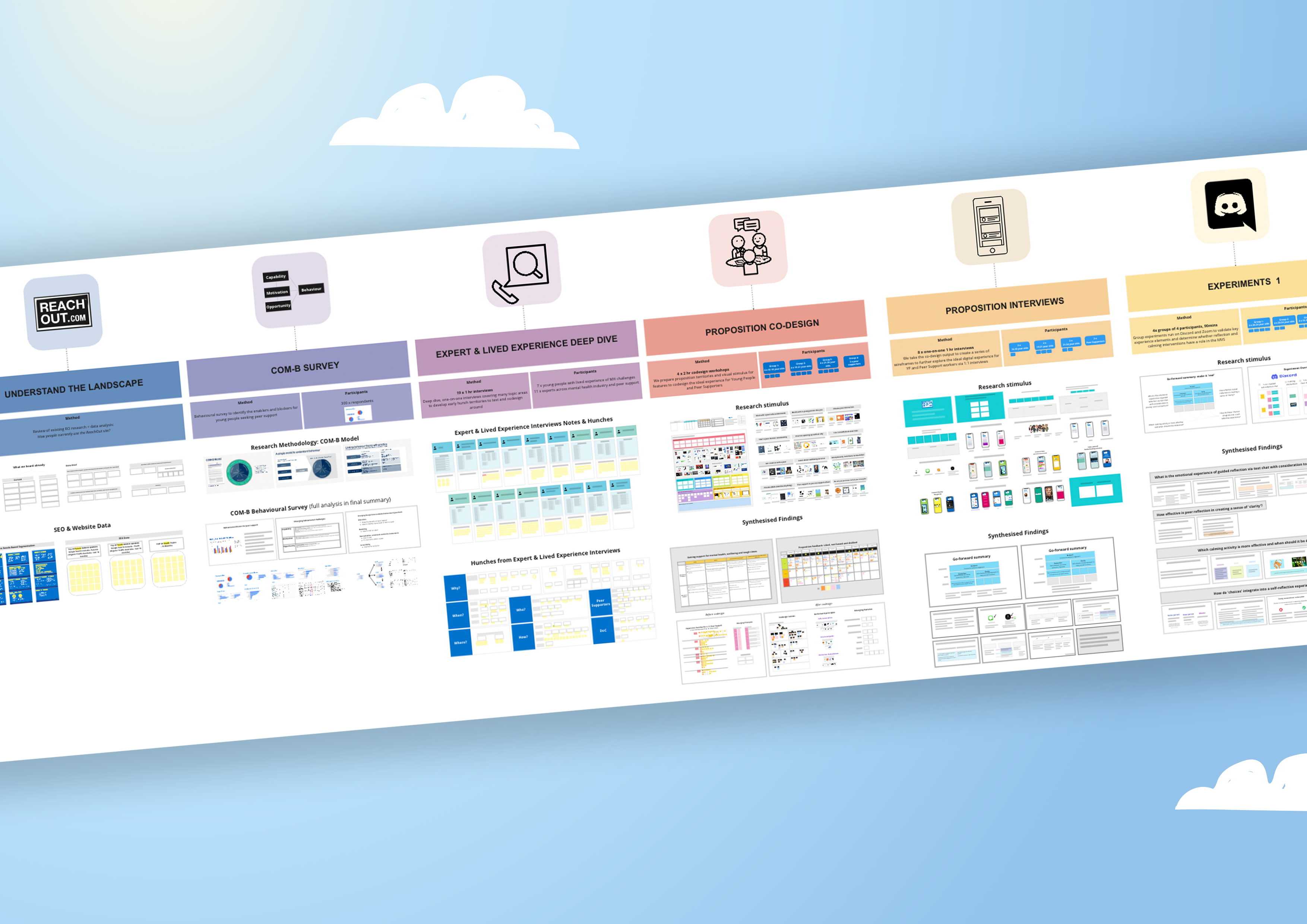
Innovation Sprints
Over 7 weeks of innovation focused co-design sprints, we uncovered young people’s support needs for a mental health service design that improves emotional wellbeing.
Service Design
We co-designed a peer worker service model, involved the peer community in testing and service pilots, and created operational procedures. Steven was the lead on this part of the project.
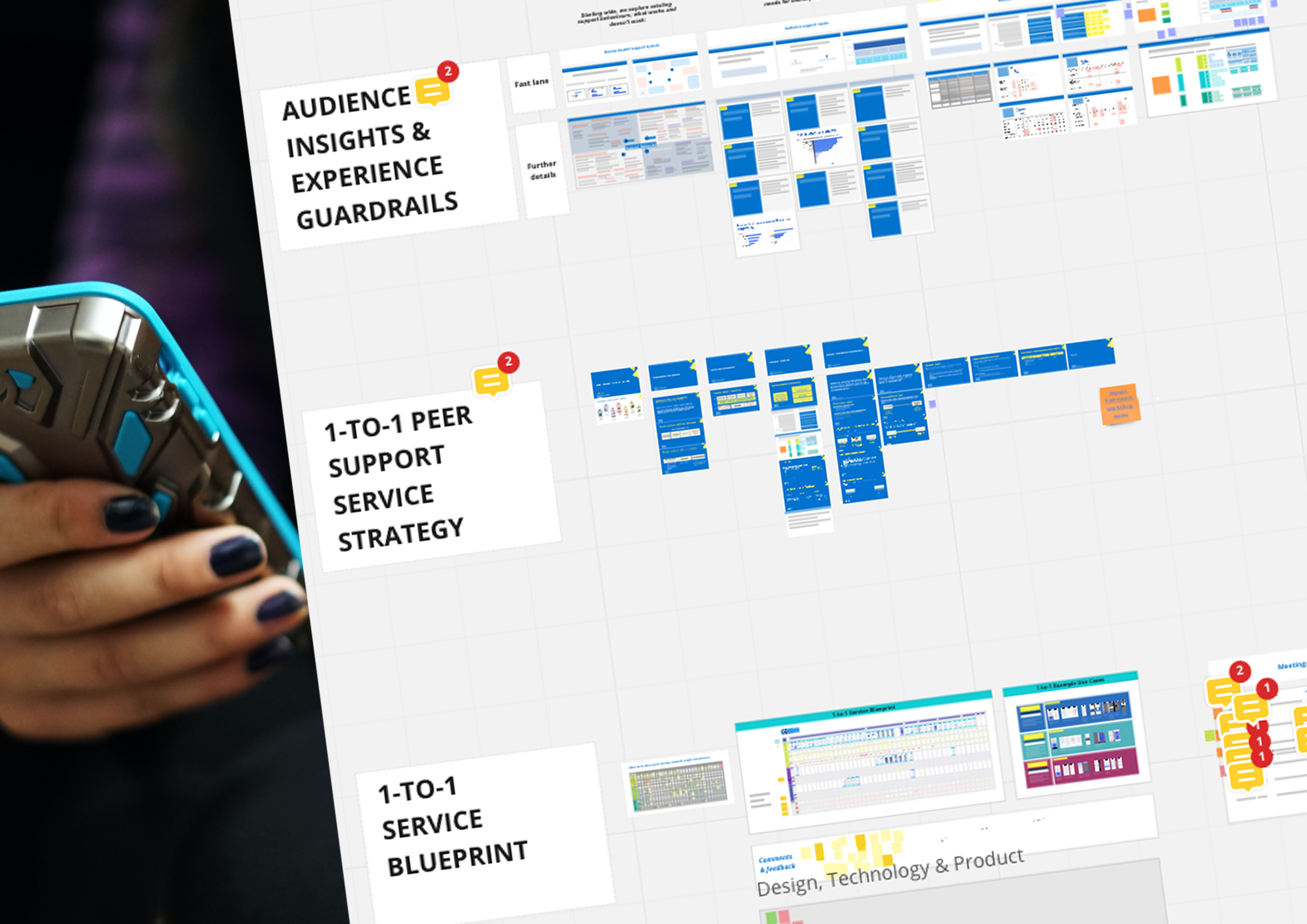
Innovation Research
Once the service model was uncovered, I created a blueprint and led the ReachOut team through a co-design process towards an ideal product design. The user experience was, again, tested extensively with young people, and I collaborated with the ReachOut tech team to create final designs that were effective for them to build. Deepend’s Jackie-Lee Hughes contributed to the User Interface design.
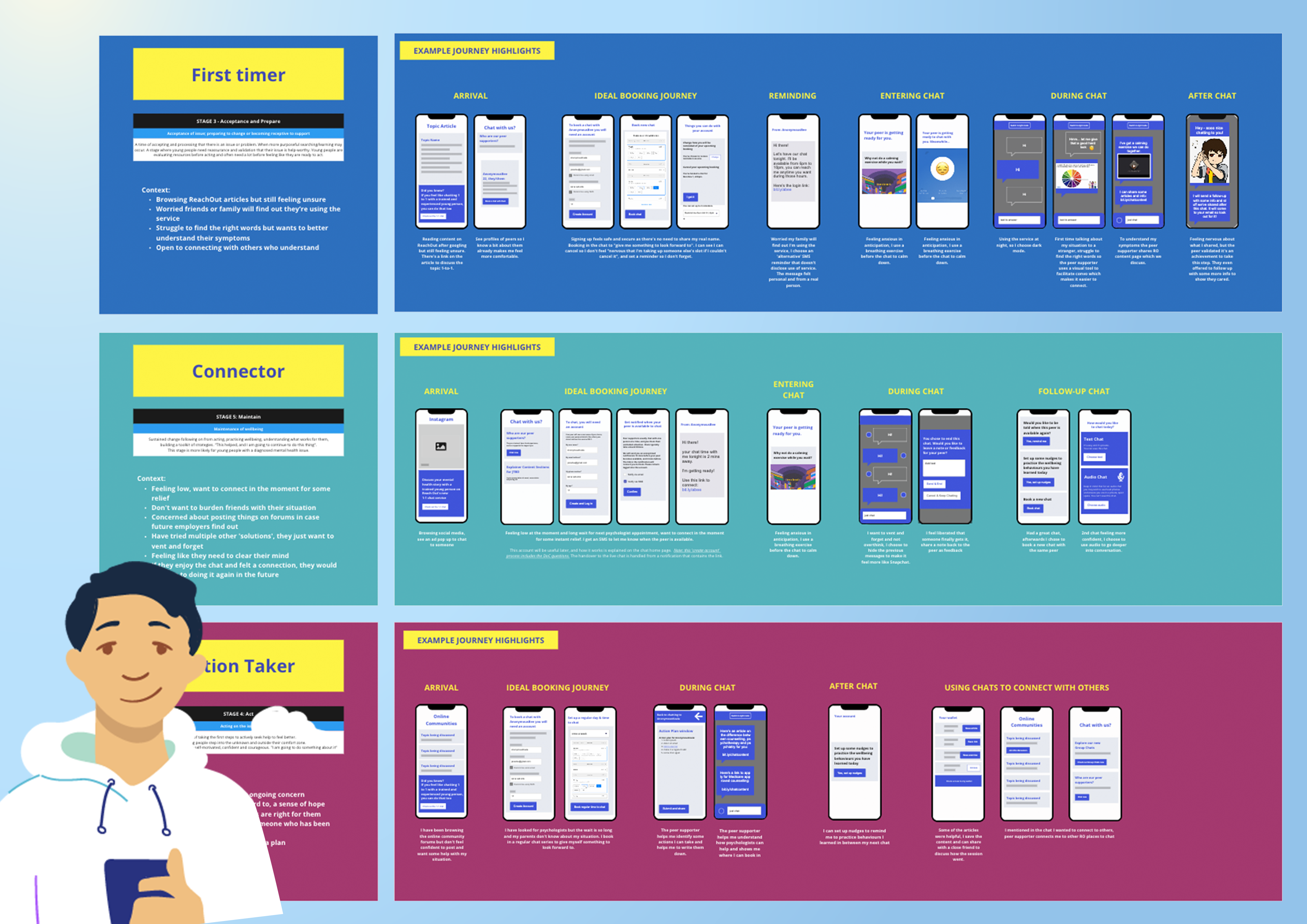
From Insights to Features
From our co-created design vision and guardrails, we developed three distinct use cases that our service model answers.
A Collaborative Digital Product Design
Through prototype-based codesign techniques, we progressively evolved a design with a booking system, onboarding and chat that answer to specific support needs.
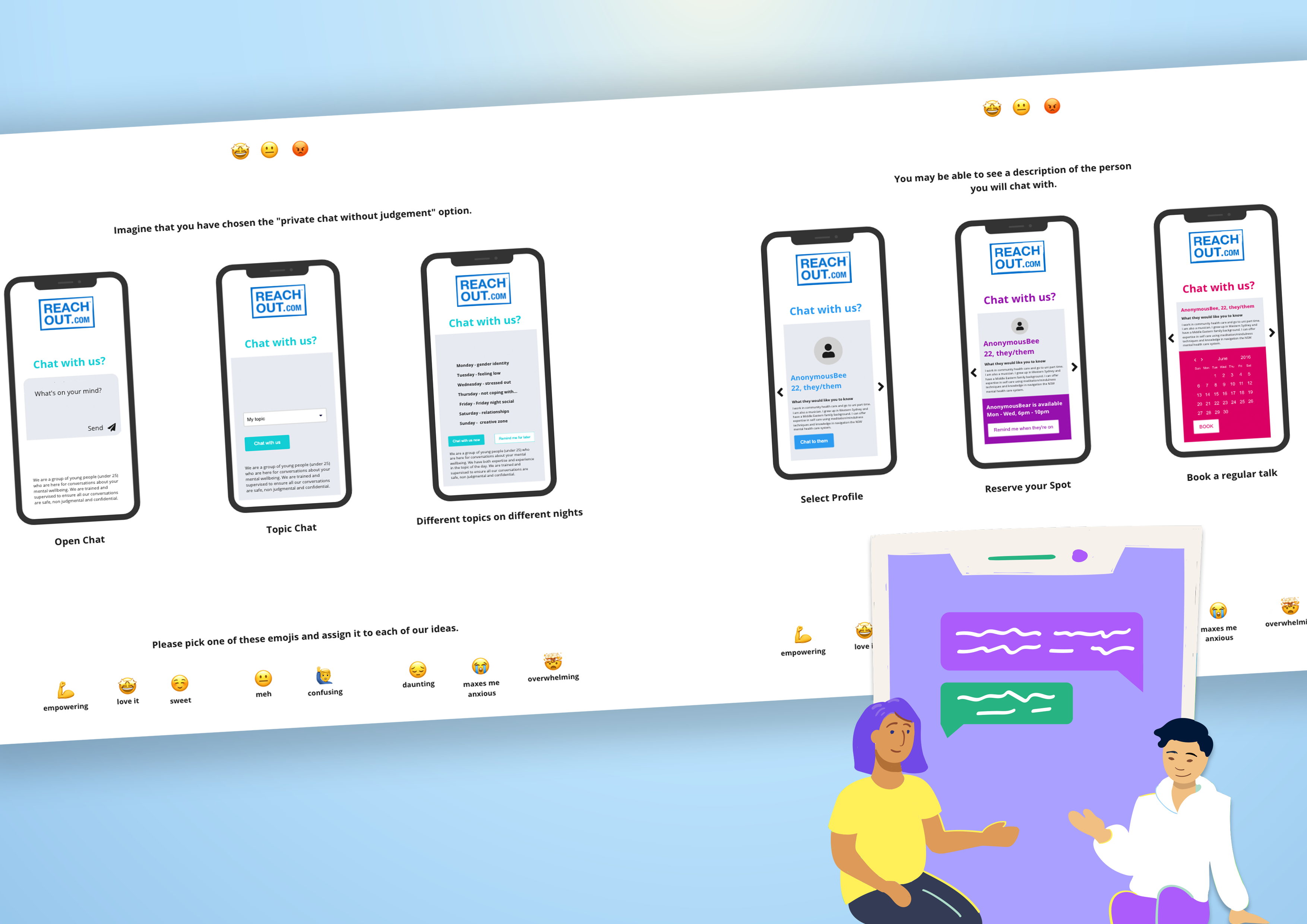
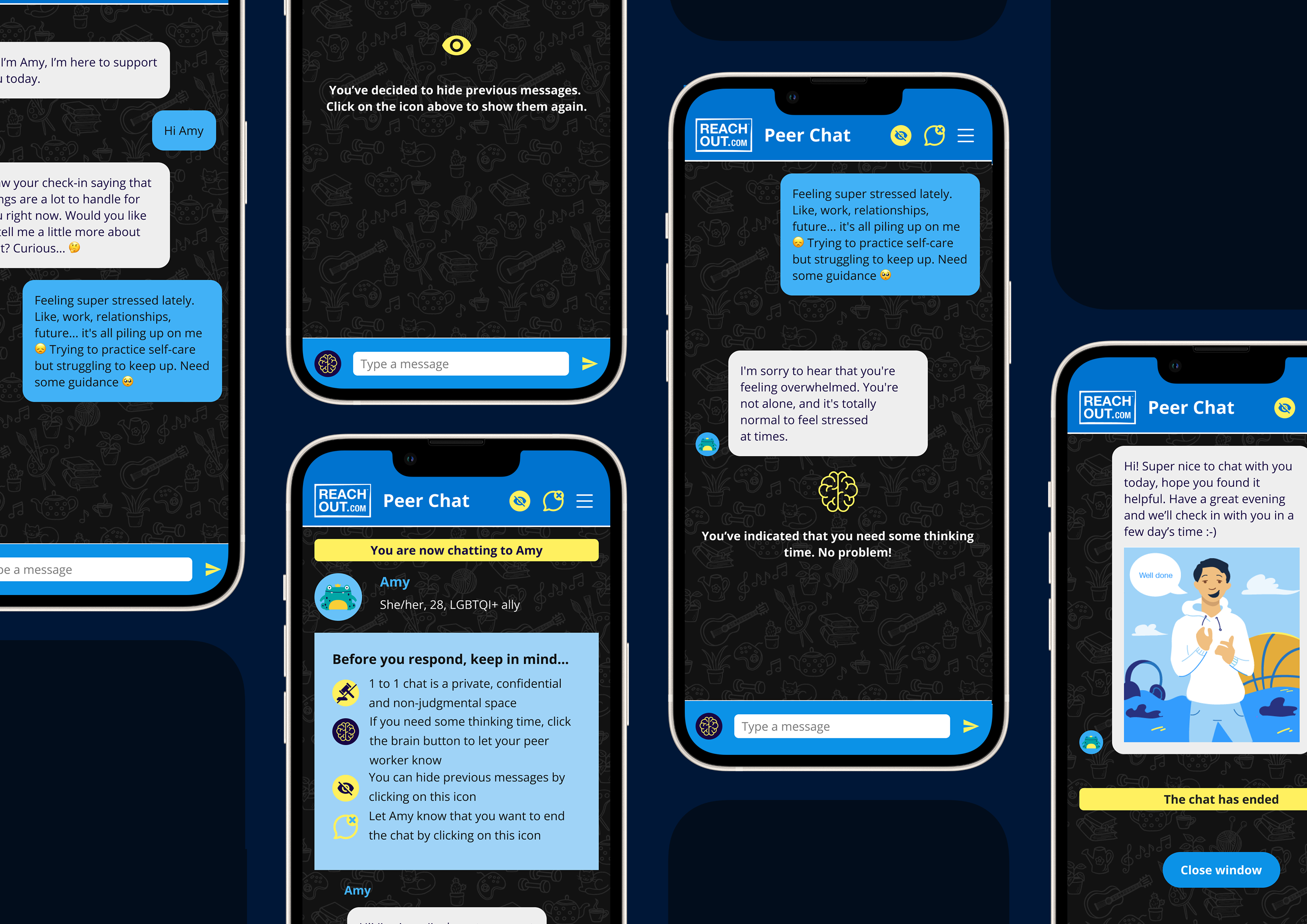
Turning Co-Design into User Experience
Our text chat design includes innovative health focused solutions such as the ability to hide previous messages from view to avoid re-triggering and the ‘I’m thinking’ button that gives support seekers time while ensuring supporters are informed that everything is okay.
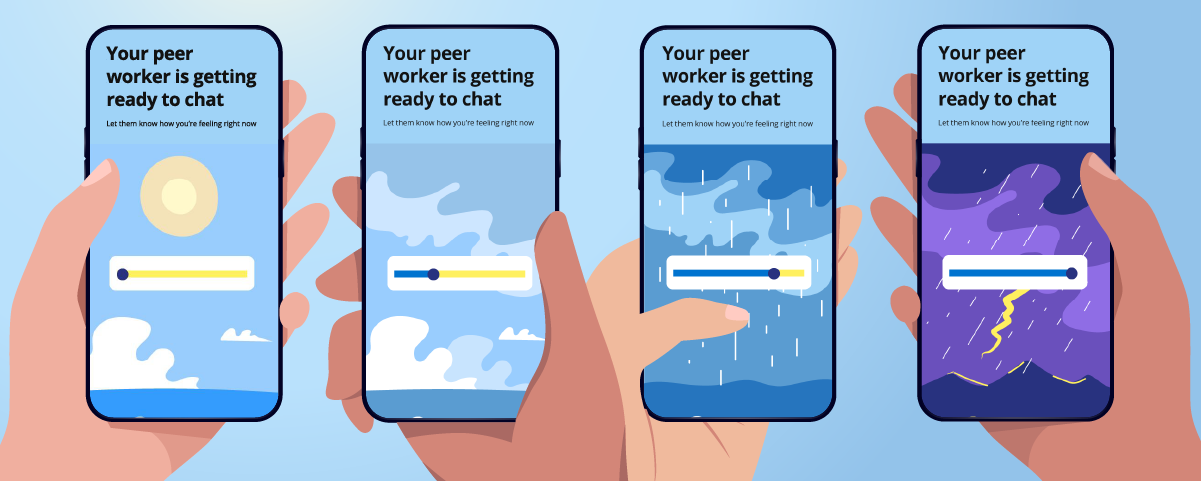
Emotional Wellbeing by Design
To ensure that users’ emotional wellbeing is enhanced, we augmented the main chat functions with a variety of innovative designed interventions, such as this calming onboarding interaction that reduces anxiety on starting the support chat.
Awards



ReachOut PeerChat was developed by Deepend and How to Impact in collaboration with ReachOut. Designers on the project were Ellie Brassé (Experience Design Lead), Jackie-Lee Hughes (Interface Design Lead), Paulus Van der Kolk (Product Owner) and Steven Sullivan (Service Design Lead).
Leave a Reply